Agent Orange & Dioxin Committee
BY MAYNARD KADERLIK, CHAIR
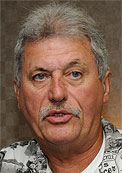 I want to thank VVA President John Rowan for asking me to chair the Agent Orange Committee. It has been a real whirlwind. The Agent Orange issue is a huge undertaking, and we will do our best to address it. I have put in place a list of goals that we will work on as a team.
For me this issue came home to roost when members of my family began having problems related to AO exposure. Paying the bills of veterans and their children will be a difficult task. We—veterans, families, neighbors, and friends—need to contact our representatives to back legislation in Congress. Minnesota has eight congressmen and two senators, and I ask people to contact all of them. If we don’t, they will not know how important these bills are to us. So, please call and don’t stop calling. Together we can make a difference.
All over this great country VVA chapters and state councils are putting on town hall meetings to educate veterans and others about what has happened to us, our children, and our grandchildren. Vietnam-era veterans have persevered and accomplished much since our war. We need to keep the fight going; Vietnam-era veterans don’t give up.
Economic Opportunities Committee
BY FRANK BARRY, CHAIR
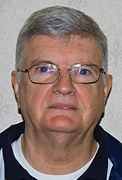 As Economic Opportunities Committee chair, I have the honor of attending veteran-related events around the country. On September 29-30, I went to the inaugural VA Policy Academy’s Veterans Economic Communities Initiative in Orange County, Calif. The purpose was to bring partners together from different industries and sectors to share best practices, resources, and tools to improve economic outcomes for veterans and their families.
Over two days more than thirty organizations hosted breakout sessions consisting of four tracks:
- Community and Place-Based Strategies: Strengthening Economic Outcomes Locally.
- National Collaboration: Models for Public-Private Partnerships.
- Veteran Employment: Finding, Recruiting, and Retaining Veteran Talent.
- Focus on Transitioning Servicemembers: Efforts to Improve Economic Outcomes Prior to Separation.
My focus was on veteran employment. Workshops included: Veteran Employment in Telecommunications, hosted by Mark Mercer of Warriors4Wireless; The Veterans Employment Center for Job Seekers, hosted by the VA’s Christi Collins; Partnering to Promote Veteran Entrepreneurship, with Todd Connor from The Bunker of Chicago; Paid Apprenticeships as a Model for Veteran Employment and Workforce Development, with representatives from DOL and the California Labor Federation, AFL-CIO, and the California Department of Industrial Relations; and A Pay-for-Success Model in Veterans Training and Employment, with trainers participating in the Accelerated Learning Program, a pilot project.
The Policy Academy will come to twenty-five cities in 2015 and an additional nine next year. To learn more about VECI and connect with your local economic liaison, contact the Veterans Employment mailbox at VeteranEmployment.vbaco@va.gov or visit www.benefits.va.gov/veci
Homeless Veterans Committee
BY SANDY MILLER, CHAIR
 I would like to welcome and thank the newly appointed Homeless Veterans Committee members: Tom Hall (Vice Chair), Dave Johnston, Joe McIntyre, Kate O’Hare-Palmer, Jerry Yamamoto, Joanna Henshaw, Cathy Keister, and Nancy Switzer. I would also like to thank VVA Staff Liaison Sharon Hodge for her years of support and insight to this committee.
The goals of the Homeless Veterans Committee for 2015-17 are an ongoing effort carried over from previous years. They include working in conjunction with the VA to end veteran homelessness by the end of this year. The current number of homeless veterans is estimated to be some 50,000. Our mission will be to continue to help local agencies across the country set up programs and initiatives to accomplish this goal and to provide transitional housing referrals for veterans experiencing homelessness.
We’ve been working on legislation revising the VA’s Homeless Grant and Per Diem funding from a reimbursement for expenses based on the previous year’s audited
expenses to a prospective payment system based on a proposed budget for annual program expenses. This change is vitally needed if community-based organizations that deliver the majority of these services are to operate effectively. We will continue to provide input through the National Coalition for Homeless Veterans Annual Conference and Annual Housing Summit, outlining the methodology necessary to accomplish this. In addition, we will provide input to VVA’s Government Affairs Department on relevant draft legislation.
The committee will continue to support legislation establishing Supportive Services Assistance Grants for VA Homeless Grant and Per Diem Service Center grantees and permanent authorization of the VA Homeless Grant and Per Diem Special Needs Grants Program. The committee is prepared to provide input for legislation through the Government Affairs Department.
Our push for making the Special Needs Grants Programs permanent will continue. It is absurd that these programs must be reauthorized every year. We also will push for new money to allow the addition of new special needs grants. The present grants only allow for the renewal of existing grants, which prohibits innovation.
The committee will seek legislation to amend the eligibility criteria for veterans enrolled in the Department of Labor’s Homeless Veterans Reintegration Program so those veterans entering into “housing first” will be able to gain access to this training for up to twelve months after placement into housing. By extending access to training, we will create job skills enhancements that will lead to more sustainable income, thereby increasing the likelihood that the veteran will remain housed.
Please feel free to contact me at smiller@vva.org with any information concerning your chapter or state council activities regarding homeless veterans.
Minority Affairs Committee
BY JERRY YAMAMOTO
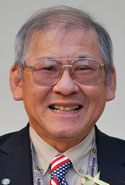 Our committee members for the next two years were appointed at the October BOD meeting. They are: James Maddox, Connie Steers, Joe Jennings, Francisco Ivarra (Vice Chair), Linda Blankenship, Gumersindo Gomez (Vice Chair for Hispanic Affairs), Jorge Pedroza (Vice Chair), Henry Urioste, Dave Simmons, Paul Washington, Joanna Henshaw (AVVA Liaison), Bernie Edelman (Staff Liaison), Pete Peterson, Anthony Molina, Virgie Hibbler, Stephen Bowers (Vice Chair for Native Americans), Manuel Pedraza, and Wayne Reynolds.
Committee members: Please advise me by email of any minority veterans’ activities you have attended and the dates and locations of the activity as soon as possible after the event. We are starting our nationwide schedule of attending these events.
VVA members: Please let me know of any minority veteran activities where you live and the dates and locations of those events so I can inform committee members. If you know the committee member who lives near you, please advise that member of the event’s details.
Thanks, John Rowan, for reappointing me as Minority Affairs Committee chair and the BOD for approving the committee members. Our committee is here to serve all Vietnam veterans, their families and communities, as well as veterans of all eras. We are also working to recruit as many new VVA members as possible.
PTSD & Substance Abuse Committee
BY THOMAS C. HALL, Ph.D., CHAIR
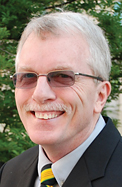 Secondary traumatic stress: No one is immune. Over the past several years, the idea of secondary PTSD (or secondary traumatic stress, as it is referred to in the literature) has begun to reveal what those who have lived in the impact zone of PTSD have known for years, but until recently have had difficulty describing.
Secondary traumatic stress has been called a natural emotional reaction to the traumatic experience of a significant other. Secondary traumatic stress is almost identical to PTSD—except that it’s caused by indirect exposure to the traumatic event through close contact with the primary victim of trauma.
In other words, secondary traumatic stress—let’s call it STS—is the stress caused by providing help, or wishing to help, a traumatized person. STS in family members and caregivers is indicated by an array of physical and emotional symptoms. These include: headaches; indigestion; susceptibility to infections; increased use of alcohol, drugs, or tobacco; nightmares about the person who was traumatized; insomnia; loss of interest in activities formerly enjoyed; irritability; chronic fatigue; and changes in perception of one’s own life and of other people.
The entire family becomes hypersensitive in efforts to guess what won’t upset a loved one suffering from PTSD. Family members try to avoid upsetting the veteran as much as possible. They try to make sense of the veteran’s sleepless nights and restless dreams, and to cope with the veteran’s absent-mindedness—all while walking on eggshells in response to the veteran’s low frustration threshold, lack of patience, aggressiveness, self-blame, and inability to carry on with his or her role in the family.
In this context, family members may develop higher levels of depressive symptoms and anxiety, problems in concentration, emotional exhaustion, pain syndromes, and sleeping problems. Life in this environment has been described as “going 100 miles per hour with the brakes on.” The children often feel responsible to solve family difficulties. This has the potential to leave them at higher risk for future physical, behavioral, and mental health issues.
Borrowing from lessons learned as families struggle to cope with the strain of living with a chemically dependent member, we might be able to help those suffering from what has been commonly noticed in these traumatized families and relate it to STS. The family or caregiver did not cause PTSD, they can’t control PTSD, and they can’t cure PTSD.
Since more than a third of war veterans’ wives meet the criteria for secondary traumatic stress, any treatment offered to veterans with PTSD must address the traumatization of their families. Underscoring the impact of PTSD on families, the National Vietnam Veterans Readjustment Study found that male and female veterans without PTSD tended to have longer-lasting relationships with their partners than their counterparts with PTSD. Rates of divorce for veterans with PTSD doubled those of veterans without PTSD. And vets with PTSD were three times more likely than their counterparts to divorce two or more times.
The emotional and psychological wounds sustained by families are real. We have the responsibility to advocate for treatment of PTSD that includes treatment for the family. The possibility of recovery from a veteran’s mental health issue is improved by addressing its impact on the entire family.
For more information, see C.R. Figley, ed., Burnout in Families: The Systematic Cost of Caring (CRC Press, 1998). Also: C.S. Fullerton and R.J. Ursano, “Posttraumatic Responses in Spouse/Significant Others of Disaster Workers,” in Posttraumatic Stress Disorder: Acute and Long-Term Responses to Trauma and Disaster (American Psychiatric Press, 1997, pp. 59-76).
Veterans Against Drugs
BY DAVE SIMMONS, CHAIR
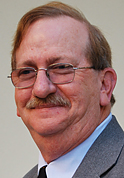 I would like to thank VVA President John Rowan and the Board of Directors for having the confidence in me to continue as chair of Veterans Against Drugs (VAD). Following the National Convention in July, VAD was changed from a task force to a committee. We are proud to be the “In Service to America” community service program for VVA.
Members new to VVA may not know that VAD was developed by the Congressional Medal of Honor Society in the 1980s and then completely turned over to Vietnam Veterans of America in the 1990s.
VAD has three programs that are adaptable to all ages and geographic areas: an anti-drug program, an anti-violence or bullying program, and a patriotism program. Local chapters work with youth in schools and after-school programs, Boy Scouts, Girl Scouts, Boys and Girls Clubs, religious programs, and many other youth programs to present the VAD Core Values. This will be my tenth year as chair.
It gives me great pleasure to announce that this year the Veterans Against Drugs National Commit to Life Award was presented to Bitterroot Valley, Montana, Chapter 938. This chapter has worked very hard, has a lot to be proud of, and deserves this recognition.
During the next two years, Veterans Against Drugs will update its patriotism program. There are five current core values for this program: Flags, Traditions, Homeland Security, The Role of the Military Today, and National Holidays.
We are planning to expand these topics. Members who would like to make suggestions or receive updated information on VAD programs should contact me at dsimmons@vva.org
Veterans Benefits Committee
BY TOM BURKE, CHAIR
 I say a fond adieu to the Public Affairs Committee. I’ll miss our heady conversations. But lightning must have struck me, for I am energized to say hello to my new committee: Veterans Benefits. I will be replacing John Margowski, who worked long and hard as committee chair. I know I speak for everyone when I acknowledge his work and wish him the best.
With new responsibilities and a new committee, I know I will face many new challenges. I am fortunate to have several years of background with service officer programs. The challenge came quickly, as I was required to look into several situations requiring immediate attention. I appreciate the confidence VVA President John Rowan and the Board have shown in me. Our committee will look into many items of interest and report on them in future issues of The VVA Veteran. I have sought out proven leaders of our organization and some new volunteers to help move the committee along.
The committee has provided the Board of Directors with a list of short-term and long-term goals. These include:
- Continue to review and streamline the VB Grant application forms.
- Continue to enforce grant application deadlines.
- Periodic service officer program site visits at all regional offices.
- Develop a plan for taking over the representation of claims folders when a VVA service officer ceases to function as such.
- Develop a transition plan for when a service officer program is shut down.
The Veterans Benefits Committee will continue to support VVA’s service officer program. We will strive to continue the committee’s good work.
Women Veterans Committee
BY KATE O’HARE-PALMER, CHAIR
 During a break in Veterans Day activities in Washington, D.C., in 2013, I was sitting in a hotel dining area with several other Vietnam War nurses when a booming voice called out: “Is anybody here from the 2nd Surgical Hospital In Chu Lai?” A big guy walked through the area repeating the question. I jumped up and said, “Yes, I worked at the 2nd Surg!”
So began an amazing reunion for Oregonian Ron Cannon, 5/46th Inf., 2nd Armored Division, with nurses who worked at the hospital he was taken to by 54th Dustoff on April 21, 1968. The 2nd Surgical Hospital was quickly morphing into the size of an evacuation hospital (300 beds). Cannon had his records, and I was able to connect him with Capt. Jean Roth, the OR nurse who worked on him with his orthopedic surgeon, Dr. Robert First.
Cannon was an RTO for Echo-Recon and had shipped out to LZ Gator. That April morning his unit had headed up to Hill 56 when two buddies were fatally wounded after setting off a Bouncing Betty land mine. He was told to freeze in place until a Dustoff came to extract the wounded unit members. When he was told to head straight for the chopper, Cannon took one step and was catapulted fifteen feet into a tree and then back down. His right leg was blown off below the knee and the back of his left leg was shredded by shrapnel.
Cannon received thirty-one units of blood during the initial operation and was not expected to live. He woke up in ICU with his buddies in beds scattered around him. He had several more surgeries for further debridement there, at the 8th Field Hospital in Nha Trang, and at Camp Zama, Japan.
He made it back to Madigan General Hospital at Ft. Lewis on May 26, 1968. During the next eight months, he went through many more surgeries, one cardiac arrest, skin grafts, stump revisions, traction, and much physical therapy.
The injuries forced his medical retirement from the Army. But Cannon’s story is a testament to life. He married, has a family, and is a committed community volunteer with youth sports. He recently retired from a career with veterans to ensure that current active duty and reserve personnel are protected against discrimination in employment. He dedicated his civilian career to the memory of Ronald F. VanAvery, a friend who died that April 21 on Hill 56. Cannon has made a mission of following up on all those who made his survival possible—his angels.
What Ron Cannon has done for many of us in the medical field is to bring a renewed focus on what happened to all those who were carried through our doors on litters, patched up, and sent on to the next bigger hospital. We never saw how they survived. What a gift he gave us. What a special time Veterans Day and Memorial Day is when veterans can come together and also share the appreciation of a job well done.
Government Affairs Committee
Crisis of Confidence at the VA
BY PETE PETERSON, Chair, AND GOVERNMENT AFFAIRS STAFF
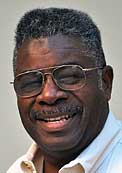 Back in April, in written testimony prepared for a hearing called by Senate Veterans’ Affairs Committee Chair Johnny Isakson (R-Ga.), VA’s Assistant Inspector General for Healthcare Operations John Daigh, Jr., said the Veterans Health Administration “is at risk of not performing its mission as the result of several intersecting factors.” Back in April, in written testimony prepared for a hearing called by Senate Veterans’ Affairs Committee Chair Johnny Isakson (R-Ga.), VA’s Assistant Inspector General for Healthcare Operations John Daigh, Jr., said the Veterans Health Administration “is at risk of not performing its mission as the result of several intersecting factors.”
VHA “has several missions, and too often management decisions compromise the most important mission of providing veterans with quality health care,” he said. “Leadership has too often compromised national VHA standards to meet short-term goals. The VHA’s internal processes are inefficient and make the conduct of routine business unnecessarily burdensome.”
In congressional hearings since, the same words have been uttered over and over—“inadequate,” “inconsistent,” “ambiguous”—to describe “systemic mismanagement” of VA projects and programs with a pervasive cynicism over the lack of “accountability” and, in what was supposed to be a hallmark of the current administration, “transparency.”
In early October two Veterans Benefits Administration employees were transferred at a cost of $400,000. This incited House Veterans’ Affairs Committee Chair Jeff Miller (R-Fla.) to schedule a hearing that he dubbed, “An Examination of the VA Office of Inspector General’s Final Report on the Inappropriate Use of Position and the Misuse of the Relocation Program and Incentives.”
Neither employee attended the hearing, so the committee voted unanimously to subpoena them to a rare evening hearing.
Members praised the only witness present, OIG Deputy Inspector General Linda Halliday. She coolly discussed the OIG’s damning report that “detailed results of our administrative investigation into allegations that VBA senior executives inappropriately used their positions for personal and financial benefit, and that VBA misused the VA relocation program for the benefit of its Senior Executive Service workforce.”
Part of this benefit was that one of the officials, who left her position at the VA Central Office in Washington, D.C., nevertheless “retained her high-level SES salary, despite the position being two levels lower on VA’s SES pay scale,” Halliday noted in her written testimony. She noted, too, that “VA could not [legally] reduce the annual salary upon reassignment despite the decrease in scope of responsibilities.”
Rep. Jackie Walorski (R-Ind.) viewed this gaming of the system as a “crisis of confidence” in the VA: a corporate culture that doesn’t hold people accountable for their roles in facilitating “egregious spending.”
Similar sentiments were expressed by Democrats in the HVAC. Perhaps most pointed was a comment by Nevada Rep. Dina Titus, who wondered if the VA is “full of patronage and cronyism.” She is right about the corporate culture of VA managers.
Most VA employees get up every day and work hard to help veterans get good health care and receive the benefits they have earned. As VVA has often said, both VA service delivery staff and veterans deserve a VA management that is as good as they are.
DON’T DRINK THE WATER
A headline in a recent VA press release read: “VA Expands Review of Chemical Exposure in Drinking Water at Marine Corps Base Camp Lejeune.”
Pressed and prodded by former Marines, the Corps finally acknowledged that the health of Marines and their families stationed at Lejeune for at least thirty days between August 1, 1953, and December 31, 1987, might have been compromised.
Going back two years, however, the acting assistant secretary for personnel and readiness in the Department of Defense issued a memorandum approving “a 2-year extension of the waiver from the requirement to document occupational and environmental health monitoring summaries and include them in individual medical records.”
The key reason was that “monitoring summaries address population-level health risks, not individual exposures [and] including this information in individual medical records may result in biased assessments of exposure and health risk, faulty association between exposure and adverse health outcomes, and support for disability claims for chronic illnesses that may not be due to exposure.”
Under pressure from Sen. Richard Burr (R-N.C.), then the ranking member of the Senate Veterans’ Affairs Committee, Congress passed and the President signed the Honoring America’s Veterans and Caring for Camp Lejeune Families Act of 2012. In accord with this legislation, the VA set regulations to establish presumptions of service connection “for certain conditions resulting from exposure to contaminated drinking water.”
The VA reimburses health care expenses to eligible family members afflicted with any of fifteen conditions associated with exposure to the toxic water. This list will be expanded to include kidney cancer, acute myelogenous leukemia, and angiosarcoma of the liver, which are related to long-term exposure to the chemicals in the contaminated water: benzene, vinyl chloride, trichloroethylene, and perchloroethylene. These are volatile organic compounds used in industrial solvents and components of fuels.
Veterans may file claims online at www.ebenefits.va.gov or by calling 800-827-1000. For more information, contact your nearest VA health care facility by calling 877–222–8387 or by going to: www.publichealth.va.gov/exposures/camp-lejeune The VA also has a website on Camp Lejeune historical water contamination: www.publichealth.va.gov/exposures/camp-lejeune/index.asp The Marine Corps, the news release noted, “encourages all those who lived or worked at Camp Lejeune before 1987 to register for notifications regarding Camp Lejeune Historic Drinking Water at https://clnr.hqi.usmc.mil/clwater
VETERANS ON THE HIGHWAY
Enacting legislation is kind of like making sausage: The process is messy but, in the end, the sausage tastes pretty good. Recently, some really important veterans legislation got passed—as part of a three-month extension of H.R.3236, a bill on highways. The Senate, by a vote of 91-4, created an expanded highway law that frees up money for the VA’s medical accounts.
VA Secretary Bob McDonald had threatened to shut down or cut back services in VA Medical Centers in light of a $2.5 billion shortfall. Senators decided not to continue playing hardball—for now, at least—with McDonald, fearing he would actually go through with his threat.
The hybrid bill gives the VA the flexibility McDonald asked for to transfer some $3.4 billion from Congress’ Choice legislation—the $10 billion emergency fund to enable veterans who reside more than forty miles from a VA healthcare facility that meets their needs, or who cannot get an appointment with a VA clinician within 30 days, to get medical help locally.
Demand for this emergency fund was less than anticipated. So while the VA was scrambling for ways to eliminate a serious shortfall in medical accounts and to pay for the latest overage of some $800 million to complete the new VA Medical Center in Aurora, Colorado, almost $10 billion lay fallow in a separate account.
If Congress hadn’t acted, and if the President didn’t get a bill on his desk that he could sign, the remains of that unspent $10 billion would have rolled over into the fiscal year that began October 1.
Some lawmakers were less than happy about what they had just voted on.
“The bill would extend a helping hand to heroes who need it by covering unfunded requirements the administration failed to budget for,” Majority Leader Mitch McConnell (R-Ky.) said.
And it wasn’t only Republicans who were unhappy.
“We’re in this situation because of, quite frankly, ineptitude in planning that can only be characterized as management malpractice,” Sen. Dick Blumenthal (D-Conn.) said. “This crisis must stop and Congress cannot be expected to continue to bail out the VA because of mismanagement.”
Other provisions in the new law require the VA to devise a plan by November 1 to consolidate multiple non-VA care programs—one out of every ten dollars in the VA healthcare budget is expended outside the VA system—into a single program. This program is to be called the Veterans Choice Program.
The legislation also mandates that future budget requests for the VA contain an appropriations account for non-VA medical and hospital care programs, which actually is a good idea.
Congress also adopted legislation to create a veterans identification card, making it easier for veterans to prove that they had served in the U.S. armed forces.
IN WEST LOS ANGELES
One hundred, twenty-seven years ago, 387 acres in West Los Angeles was set aside for the exclusive benefit of veterans of the U.S. armed forces. That promise has been mired in controversy as the VA leadership leased parcels to a variety of private enterprises.
With VVA and other veterans organizations criticizing the VA’s misbegotten stewardship of the campus, and with some 4,400 chronically homeless veterans in Los Angeles County, an obvious need to shelter these men and women was not being met.
To resolve a lawsuit, VA Secretary McDonald, working with VSO representatives and the Southern California ACLU, arrived at a solution that seemed to satisfy everyone—except a few “Old Guard” veterans who would like the campus opened to all homeless veterans in the area immediately.
The VA doesn’t consider this approach pragmatic. Now, California’s two U.S. senators and the area’s representative are proposing legislation that would facilitate moving some of the thousands of veterans living in makeshift encampments across the region into housing at the West L.A. campus.
In a letter to the leadership of the House and Senate Veterans’ Affairs Committees, Sens. Dianne Feinstein and Barbara Boxer and Rep. Ted Lieu outlined legislation they propose that would support “a new Master Plan to ensure the campus fully serves the needs of all veterans in Southern California.”
|














 The VVA Veteran® is a publication of Vietnam Veterans of America. ©All rights reserved.












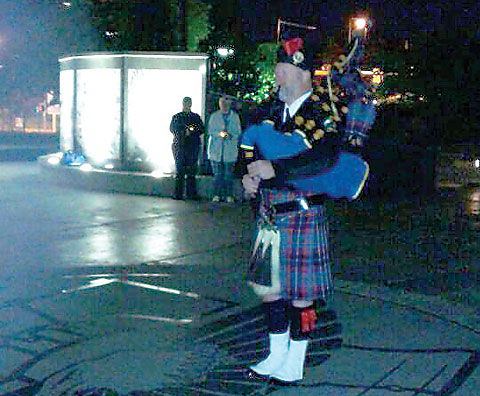 Reading the Names
 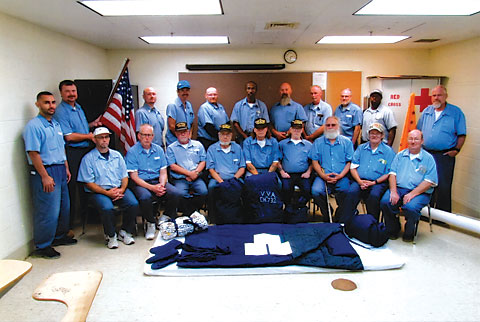 VVA Chapter 732: