|
|||||||||
          |
|||||||||
 |
 |
 |
|||||||
 |
Books in Review, January/February 2012 The Wrong Man for the Job: REVIEWS BY MARC LEEPSON
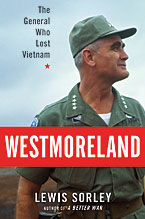
Page after page of this cogently presented, deeply researched, and convincingly argued book shows Westmoreland as a “doctrinaire, rigid, and pedestrian” leader who also was highly ambitious and never “known as a scholar,” as Sorley bluntly (and accurately) puts it. As MACV commanding general, Westmoreland was given the job of devising the American strategy on the ground in 1964. He soon decided that we could outlast the North Vietnamese and their Viet Cong allies through attrition by inducing more casualties than the enemy could stand. Westmoreland, Sorley clearly shows, never wavered from his firm belief that the Vietnamese communists would quit after seeing their KIA body count continue to pile up. Westmoreland paid scant attention to those who argued that the way to win the war was not by brute force, but to concentrate on strengthening the South Vietnamese military and implementing programs to give the South Vietnamese a society and government they would be willing to fight and die for. That strategy—Westmoreland gave it only lip service—was variously called pacification, nation building, and winning hearts and minds. Sorley demonstrates time and again that during Westmoreland’s five years as MACV head, he was all but clueless about the progress of the war. “Ensconced in a comfortable villa with an attentive house staff, riding in an air-conditioned limousine with a police escort, eating fine meals prepared by his personal chef, playing tennis at the Cercle Sportif, working in an office outfitted with executive furnishing,” Sorley notes, “Westmoreland was effectively isolated from the war in the jungle even when he was helicoptered into various base camps and command posts for whirlwind visits.” Westmoreland’s other main blunders: He devised the deeply ineffective one-year tour of duty; he preached that we could prevail in Vietnam without calling up the Reserves; he believed wholeheartedly in search-and-destroy tactics (which Alexander Haig called “a demented and bloody form of hide-and-seek”); he feuded with the U.S. Marine Corps brass over strategy and tactics; he promoted the widespread use of the body count to measure our success; he micromanaged the most mundane aspects of the war; and he repeatedly stretched the truth, dissembled, and downright lied to his superiors (both military and civilian) and to the American public about the progress of the war effort. If all of this sounds like the conclusions of some nattering nabob of left-wing negativism, think again. Lewis Sorley is a West Point graduate, a Vietnam veteran, a well-known and respected military historian, and the author of four books dealing with the Vietnam War, including an acclaimed biography of Gen. Creighton Abrams. In short, this convincing bill of particulars demonstrating the failed performance of the Commanding General of U.S. forces in the Vietnam War comes from a respected voice within the U.S. military family, a fact that gives the book even more credence.
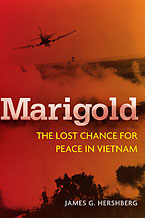
The conventional wisdom had been that these presumptive talks had little chance of success, since both sides believed they could prevail militarily and had no reason to talk. That’s what President Lyndon B. Johnson and his hawkish Vietnam War advisers (especially Secretary of State Dean Rusk and National Security Adviser Walt Rostow) claimed to their dying days. Based on his reading of newly released documents and virtually every primary source imaginable, including long interviews with Lewandowski, Hershberg shows that Johnson’s decision to resume bombing Hanoi during the delicate negotiations after a five-month pause caused the collapse of the talks before they got off the ground. The author, who is the founding director of the Wilson Center’s Cold War International History Project in Washington, D.C., also convincingly shows that the Poles (along with Italian diplomats) had authorization from the Vietnamese communists to approach the Americans to start peace talks, which is something that Johnson and his supporters had argued was not the case. This massive book is a well-written, in-depth look at the facts surrounding a controversial and convoluted abortive peace effort that, had it taken place, could have significantly altered the course of the Vietnam War.
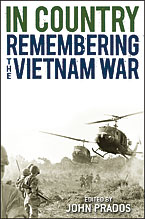
Most of the voices are those of American service personnel and North and South Vietnamese military veterans, but Prados also includes a sprinkling of civilian participants, including CIA operatives. All of the words are excerpted from previously published material. The book contains a brief overview of the war’s history, and includes a standard list of Vietnam War acronyms, as well as short introductions to each entry. The chapters are arranged roughly chronologically. “If there is a message or picture that emerges here,” Prados writes, “it is one built from the ordeals and adventures of men and women thrown into the maelstrom of this war.” Some of those men and woman have names that will be familiar to students of the Vietnam War: Philip Caputo, Fred Downs, W.D. Ehrhart, Ronald Glasser, David Hackworth, Hal Moore, Colin Powell, Norman Schwarzkopf, Jack Smith, Ray Stubbe, Hugh Thompson, Lynda Van Devanter, and Bruce Weigl. A preponderance of the witnesses are officers, and only a few are support personnel. Still, the book is a good collection of primary source material that succeeds in the author’s goal of recapturing “the smell and the taste of Vietnam and the feelings of the vets confronting the land and the adversary.”
|
 |
|||||||
|
|
|||||||||
 |
 |
 |
|||||||
 |
 |
 |
|||||||
 |
 |
 |
|||||||
 |
 |
 Warriors Remembered: Monroe County Warriors Remembered: Monroe CountyVietnam Veterans Memorial |
 |
||||||
 |
 |
 |
|||||||
 The VVA Veteran® is a publication of Vietnam Veterans of America. ©All rights reserved. The VVA Veteran® is a publication of Vietnam Veterans of America. ©All rights reserved.8719 Colesville Road, Suite 100, Silver Spring. MD 20910 | www.vva.org | contact us |
|||||||||